How to Tell if Your Gilbert Roof Has Monsoon Damage (and What to Do About It)
Lifted ridge tiles, displaced bird stops, failed flashing, and the water intrusion that follows. A plain-language guide to monsoon damage on Gilbert roofs and how to handle the insurance process.
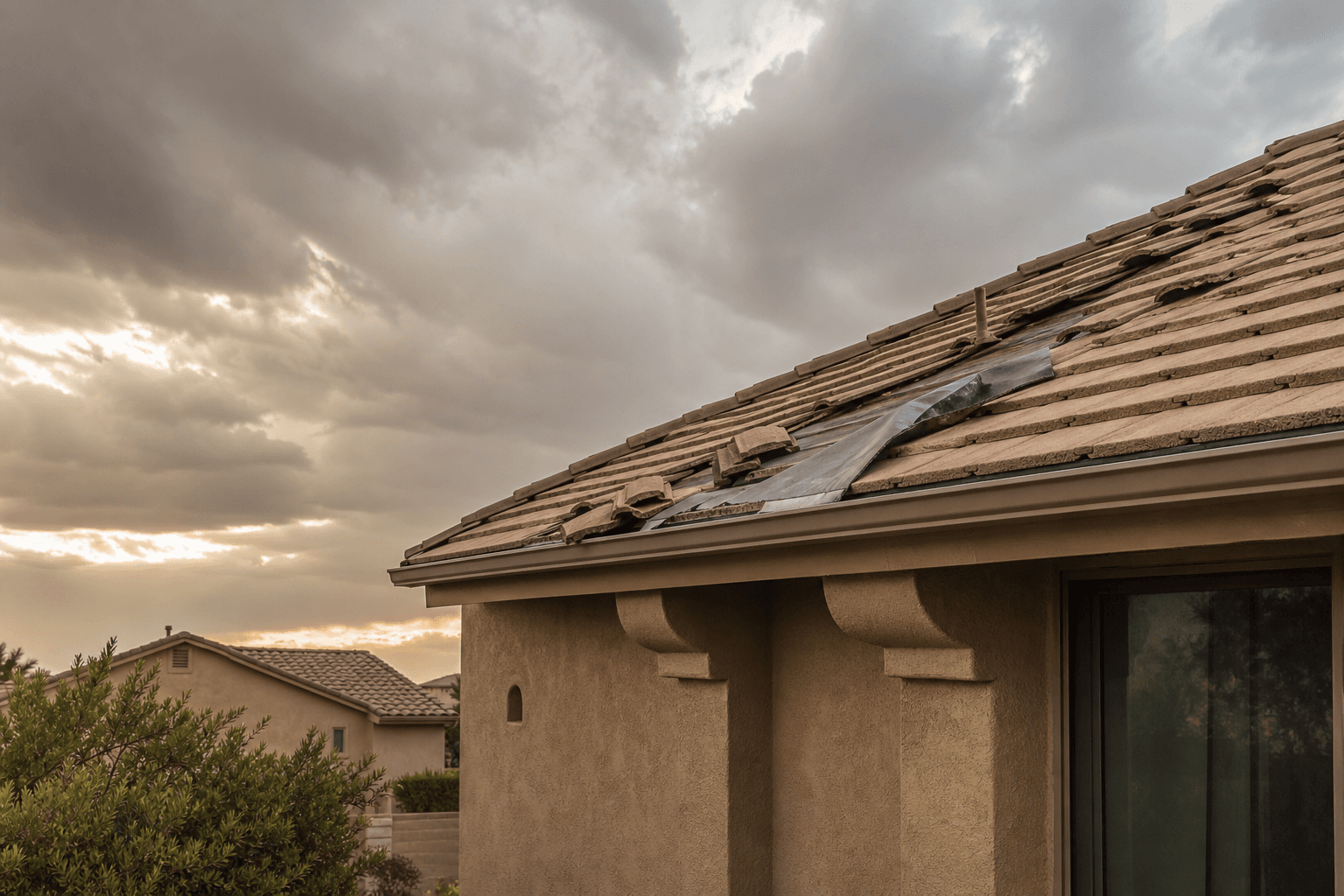
Arizona monsoon season runs roughly June 15 to September 30. During those three and a half months, Gilbert gets hit with microbursts, dust storms, occasional hail, and sideways rain that drives water under roof components it has no business reaching. Most Gilbert homes come through monsoon season just fine. Some don’t.
Here’s how to tell which one is you.
What monsoon damage actually looks like on a Gilbert roof
Three categories: tile damage, flashing damage, and water intrusion.
Tile damage
Monsoon winds are the single biggest mover of roof tile in Gilbert. What we see most often:
- Lifted ridge and hip tiles. The ridge cap and hip tiles are the most exposed and the first to move. If you can see a gap along the ridge line from the ground, you have a problem.
- Displaced bird stops. The small metal or foam strips at the eaves that keep birds and debris out from under the tile. Monsoon wind displaces these, leaving entry points for water and wildlife.
- Cracked or broken field tiles.Less common, but happens with debris impact — tree branches, flying patio furniture, hail.
Flashing damage
Flashing — the metal detail that seals transitions between roof planes and around penetrations — takes a beating in monsoon winds. Look for:
- Lifted flashing at chimneys and parapet walls.
- Displaced pipe boots around plumbing vents.
- Loose counter-flashing along the base of walls.
- Separated valley metal.
Water intrusion
This is the one homeowners see first, usually as a stain on a ceiling or a wall. Water intrusion is almost always the downstream effect of one of the above — lifted tile, displaced bird stop, failed flashing — combined with a degraded underlayment that can no longer handle the water that gets past.
What to do in the first 72 hours
If you think you have monsoon damage, the sequence matters:
- Stabilize.If there’s an active leak, get a tarp on it. Call a contractor or your insurance’s emergency response. Don’t let more water in while you sort out the claim.
- Document from the ground.Take phone photos of anything visible from the ground. Don’t go on the roof yourself — it’s both dangerous and unnecessary.
- Get a professional inspection. Have a roofer who works with insurance documented everything photographically. We do this as part of our storm damage service, and the documentation is what the adjuster will ask for.
- File the claim.Your policy has a reporting window — typically 60 to 365 days depending on the carrier. Earlier is better.
What’s typically covered
Most Arizona homeowner policies cover sudden, accidental damage from wind, hail, and other storm events. What’s not covered:
- Gradual wear and tear (including UV degradation of underlayment).
- Damage that existed before the storm and wasn’t reported.
- Damage from maintenance neglect.
A good adjuster will separate storm damage from existing wear. A good contractor — us — will document clearly so the adjuster has the information to make the right call. We don’t inflate scope to turn a repair into a reroof. If we don’t believe a claim is honest, we’ll tell you.
How to reduce your risk next season
If you want to come through next monsoon with fewer surprises:
- Annual pre-monsoon inspection. Before June, have a roofer check ridge caps, flashing, and penetration seals. A 20-minute walk-through catches almost everything.
- Fix the small things now. A slipped ridge tile is a $200 fix in May and a $15,000 insurance claim in August.
- Trim back branches. Anything overhanging the roof is a debris event waiting to happen.
If you want someone to walk your roof before the summer wind picks up, a pre-monsoon roof inspectionis a straightforward place to start. We’ll document everything, flag what matters, and tell you plainly what doesn’t.
More on how we document and file claims on our storm damage service page, or request an inspection.
Why Gilbert Tile Roofs Fail at the Underlayment, Not the Tile
The tile on your Gilbert roof will outlast the house. The underlayment underneath is the part that fails — and why fifteen-year-old master-planned homes are all in the replacement window right now.
HOA Architectural Review for Roofing in Power Ranch, Seville, and Val Vista Lakes
What to expect when you file your HOA architectural review package for a roof in Gilbert's master-planned communities — community-specific timelines, what the committee actually cares about, and how to avoid kickback delays.