Foam Roofs in Gilbert: What a Recoat Actually Includes and How Often You Need One
A foam roof lasts decades if you recoat it on a 4–6 year cycle. What a proper recoat includes, how to tell when you're due, and when recoat isn't enough.
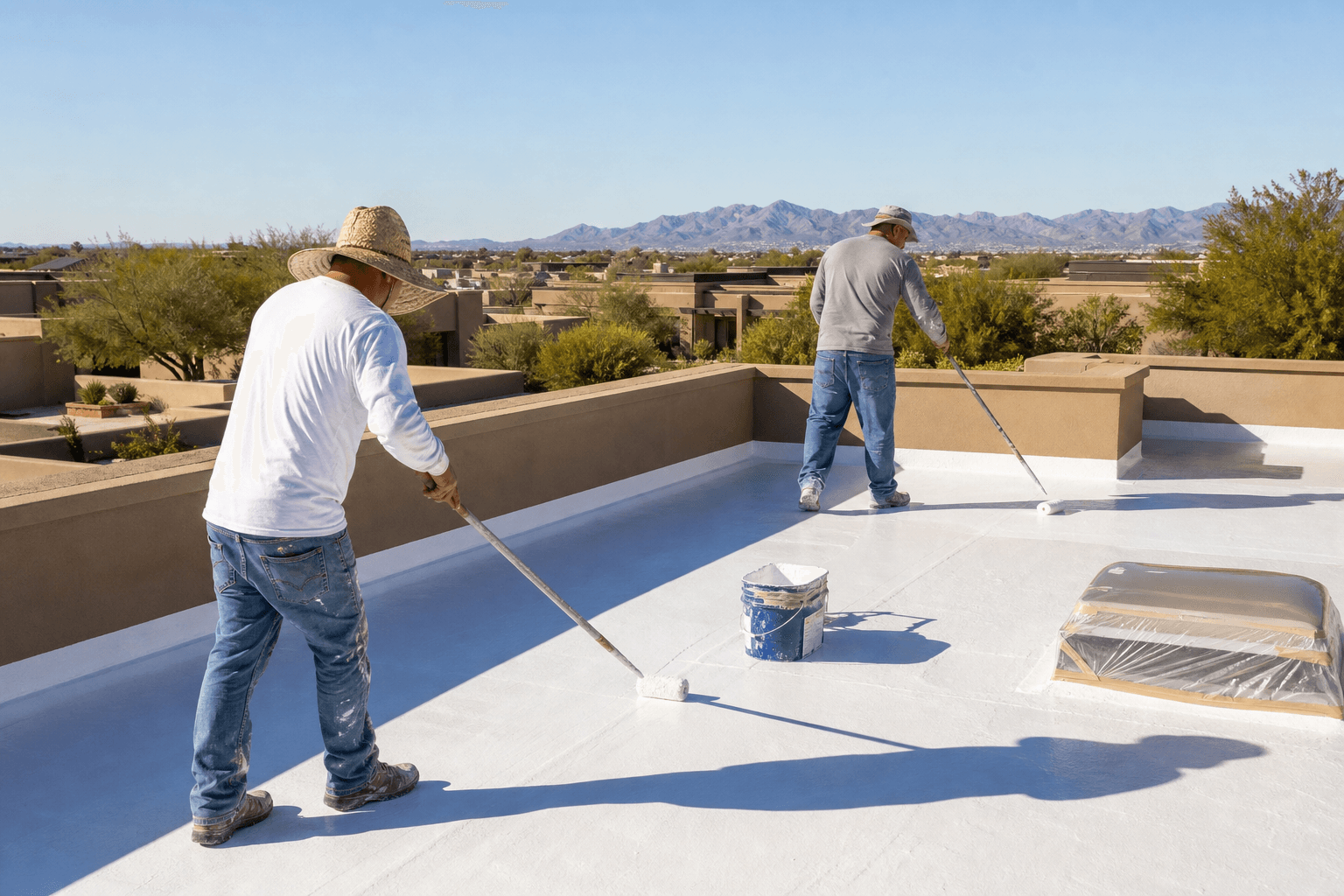
Spray polyurethane foam — “SPF” or just “foam” — is one of the better low-slope roofing systems for Arizona. Properly maintained, a foam roof can last functionally forever. The catch is the word “properly maintained.” Foam isn’t a set-it-and-forget-it roof. It requires periodic recoats, and the recoat schedule is the single biggest determinant of whether the roof gives you 40 years or 12.
How a foam roof is actually built
A foam roof is a layered system:
- The deck (usually plywood or concrete).
- Spray polyurethane foam, typically one to two inches thick, applied as a liquid that expands on contact into a continuous closed-cell foam layer. This provides both insulation and the watertight membrane.
- An elastomeric topcoat — typically silicone or acrylic — sprayed or rolled over the foam to protect it from UV.
The foam itself is the waterproof layer. The coating is the sun protection. Without the coating, UV degrades the foam within a handful of years.
What a recoat actually is
A recoat is the periodic reapplication of the elastomeric topcoat — nota new foam layer. The foam itself, if it’s intact and dry, is still doing its job. We’re reinforcing the UV shield on top of it.
A proper foam recoat includes:
- Moisture scan. An infrared or capacitance scan of the roof to identify any areas where the foam has taken on water. Wet foam has to be removed and rebuilt before coating.
- Core samples in representative areas to verify foam condition and thickness.
- Surface prep. Power wash, debris removal, spot repair of any blisters, cracks, or pinholes in the existing coating.
- Primer on areas where the existing coating has worn through to bare foam.
- Coating application— typically a base coat and a top coat, applied to manufacturer-specified thickness (usually measured in mils).
- Mil-thickness verification and closeout documentation.
What a recoat is not: someone slopping an additional layer of elastomeric over whatever’s there. That happens. It doesn’t protect the foam, and it makes the eventual rebuild significantly more expensive.
How often you need one in Gilbert
The industry-standard recoat interval in Arizona is every four to six years. Six is the upper end and only if the existing coating is in good condition when you check it. Four years is more typical on roofs with heavy sun exposure and no shading.
Visual cues that it’s time:
- Chalking on the surface when you rub it.
- Hairline cracks in the topcoat.
- Small blisters or bubbles forming.
- Fading or uneven discoloration.
None of these are catastrophic on their own. They’re all signs the coating is doing its job and approaching the end of its current service life.
When recoat isn’t enough
Sometimes a foam roof is past the recoat window and needs a partial or full rebuild. Indicators:
- Significant areas of exposed foam, already UV-degraded.
- Wet foam confirmed by moisture scan.
- Delamination of the foam from the deck.
- Structural cracks or punctures in the foam itself.
In those cases we’ll say so plainly. We’d rather quote the rebuild honestly than recoat a failed foam roof, have it leak a year later, and have you angry at us.
What a Gilbert recoat costs and how long it takes
A straightforward foam recoat on a typical Gilbert residential or small commercial roof is a one-to-two-day job. Pricing varies with square footage, condition, coating system, and any repair work needed. The estimate is specific and written, not a per-square-foot estimate we pretend is a quote.
Who does this make sense for
Foam makes a lot of sense on:
- Contemporary custom homes and mid-century modern builds with low-slope or flat roof sections.
- Commercial and light-industrial buildings.
- Older Gilbert homes with flat patio covers or low-slope porch additions.
If you’ve got a foam roof that’s been in place for four or more years and you don’t remember the last time anyone looked at it, that’s the right time to book an inspection. We’ll walk it, check the foam, give you the recoat-or-rebuild answer in writing, and schedule either the work or the next check-up.
More on the material itself on our foam roofing page. Request an estimateif you’re due.
Why Gilbert Tile Roofs Fail at the Underlayment, Not the Tile
The tile on your Gilbert roof will outlast the house. The underlayment underneath is the part that fails — and why fifteen-year-old master-planned homes are all in the replacement window right now.
HOA Architectural Review for Roofing in Power Ranch, Seville, and Val Vista Lakes
What to expect when you file your HOA architectural review package for a roof in Gilbert's master-planned communities — community-specific timelines, what the committee actually cares about, and how to avoid kickback delays.